Belly Fat After 40: Why It Collects There, and How Women Can Lose It
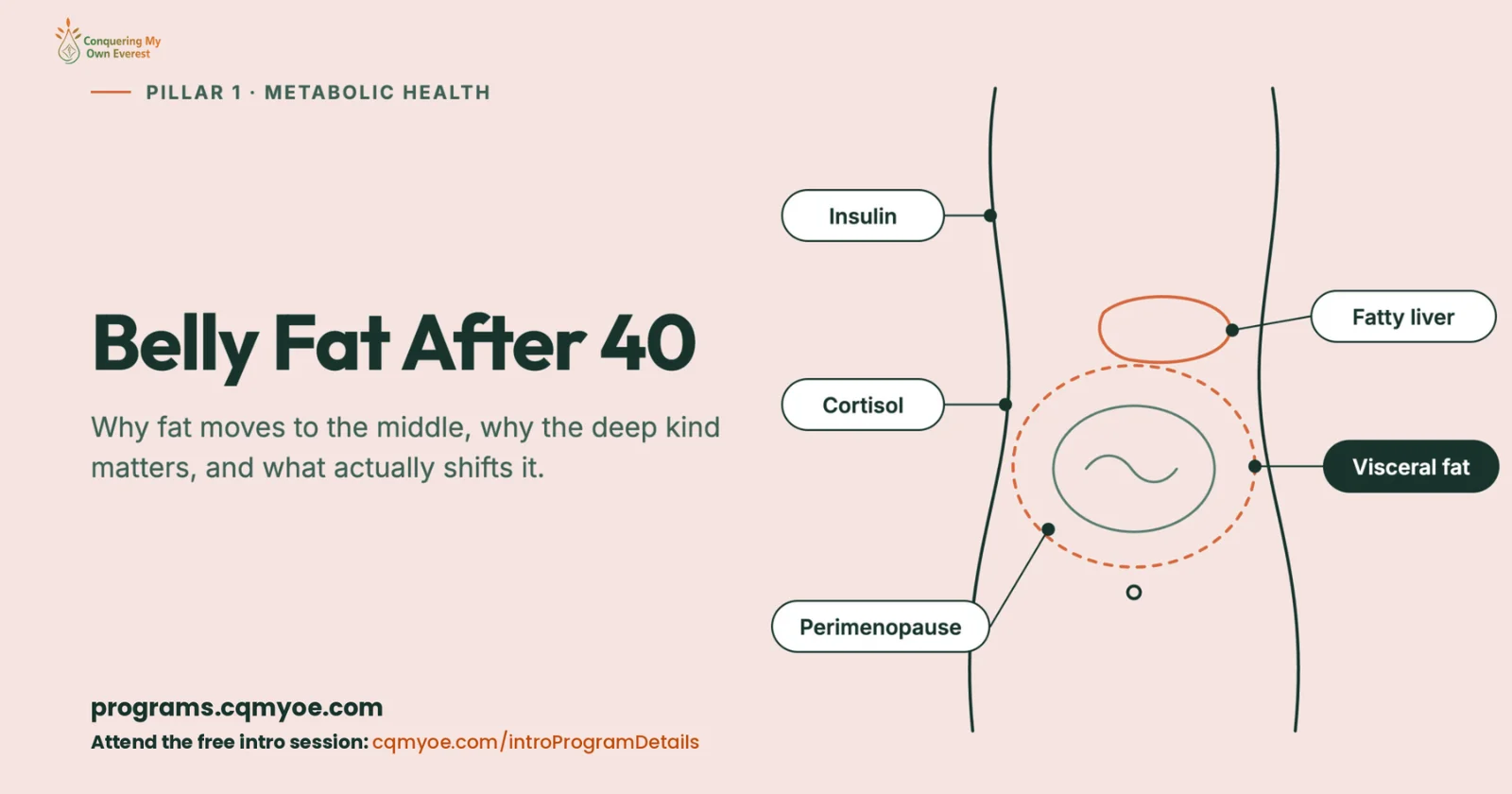
Belly fat after 40 is driven mainly by high insulin, chronic stress (cortisol) and the hormonal shifts of perimenopause, which together push fat toward the middle. The risky kind is visceral fat, deep around the organs, which often travels with fatty liver. Crunches and crash diets do not shift it. Lowering insulin, protecting muscle, sleeping well and calming stress do.
Your arms and legs look the same as they did ten years ago, but your waist has changed, and your kurtas tell you before the scale does. That is not a coincidence. After 40, the body becomes far more likely to store fat around the middle, and the reasons are hormonal, not cosmetic.
Two kinds of belly fat
Type | Where it sits | Why it matters |
|---|---|---|
Subcutaneous fat | Under the skin; the fat you can pinch | Protective in moderate amounts; mostly a comfort and clothing issue |
Visceral fat | Deep inside the belly, wrapped around the liver and intestines | Behaves like an active organ, raising risk for diabetes, heart disease and fatty liver |
A firm, rounded belly that you cannot pinch much is often visceral fat. When fat cells are full, fat also starts collecting inside organs, called ectopic fat, of which fatty liver is the commonest example. We explain all three in the three fats every woman should know.
Why fat moves to the belly after 40
1. Insulin stores it there. Years of carb-heavy meals and frequent snacking keep insulin, the storage hormone, raised. When cells stop responding to it, extra glucose is converted to fat and stored, especially around the middle. This is the root problem in how to reverse insulin resistance.
2. Cortisol sends it there. Chronic stress keeps cortisol high, and cortisol pushes sugar into the blood and favours deep belly storage. Midlife women carry a heavy load of work, family and ageing parents, so this is often the missing piece. Read more in cortisol belly.
3. Hormones change the map. Through perimenopause and menopause, the body shifts where it stores fat, from hips and thighs toward the waist. See menopause belly fat.
4. Muscle loss lowers the burn. Each crash diet costs some muscle. With less muscle to use glucose, more of it is stored as fat. That is why a calorie deficit stops working after 40.
How to measure your waist at home
- Stand relaxed. Stand relaxed and breathe out normally.
- Wrap the tape. Wrap an inch tape around your waist at the level of your belly button, keeping it level and snug but not tight.
- Note the number. Note the number on the same day each week or month, at the same time.
For Indian women, a waist above about 80 cm (31.5 inches) is a commonly used warning sign of metabolic risk, even at a normal weight. Your waist is a better progress marker than the scale, which can swing by up to 2 kg around your cycle.
Why crunches and crash diets fail
You cannot spot-reduce. Crunches strengthen the muscles underneath but do not burn the fat on top of them.
Starving backfires. Very low intakes raise cortisol and break down muscle, both of which favour more belly fat.
Juice cleanses add sugar. Fruit juice sends fructose straight to the liver, where it becomes fat.
What actually shifts belly fat: the CQ approach
1. Eat in the CQ Sequence of Eating. A little ghee first, then protein, then dal with skin, then cooked vegetables, and carbs last. See the CQ Sequence of Eating.
2. Lower your daily glycemic load. From a typical 300-400 down to 50-70 in the first 15 days, then gradually lower. Less sugar in the blood means less fat sent to the belly.
3. Get 20-25 g of protein per meal. Whole eggs, paneer, curd, fish or chicken protect the muscle you need to burn glucose.
4. Stop liquid sugar and grazing. No juices, sweetened chai or packaged drinks; three structured meals instead of constant nibbling.
5. Walk after every meal. A gentle walk after meals lets your muscles use glucose instead of storing it. Add moderate strength work two or three times a week.
6. Sleep and de-stress. Dinner 2.5-4 hours before bed, no caffeine after sunset, slow breathing before sleep. Lower cortisol means less belly storage.
7. Check your liver. If your belly has grown, ask your doctor about SGOT/SGPT tests and an ultrasound. Visceral fat and fatty liver usually travel together; start with how to reverse fatty liver.
What to expect
Visceral fat is metabolically active, so it often responds sooner than the fat you can pinch. Many women notice their waist and clothes changing within weeks, sometimes before the scale moves. Measure monthly, not daily. For the full picture, read weight loss for women over 40.
Among the 401 people who joined CQ in 2025 and 2026, obesity was the most common concern (401 members), and fatty liver the third (233). Belly fat is often where it all begins.
Want a coach to help you lose belly fat without starving? Join the next CQ batch.
This article is for education and does not replace advice from your doctor.
Frequently asked questions
Why do women gain belly fat after 40?
Higher insulin, chronic stress and the hormonal changes of perimenopause all push fat toward the waist, while muscle loss from past dieting lowers how much glucose the body burns.
Is belly fat after 40 dangerous?
Deep (visceral) belly fat raises the risk of diabetes, heart disease and fatty liver. A waist above about 80 cm is a common warning sign for Indian women.
Can I lose belly fat with exercise alone?
Exercise helps, especially walks after meals and strength work, but belly fat responds best when food, sleep and stress change too.
Do crunches reduce belly fat?
No. They strengthen the muscles underneath but do not burn the fat on top.
How long does it take to lose belly fat after 40?
Many women see their waist change within a few weeks of consistent habits. Measure monthly.
What should I eat to lose belly fat?
Indian food in the CQ Sequence of Eating, with 20-25 g of protein per meal, a lower glycemic load and no sugary drinks.