Weight Loss for Women Over 40: Why What Worked at 30 Stops Working, and What Fixes It
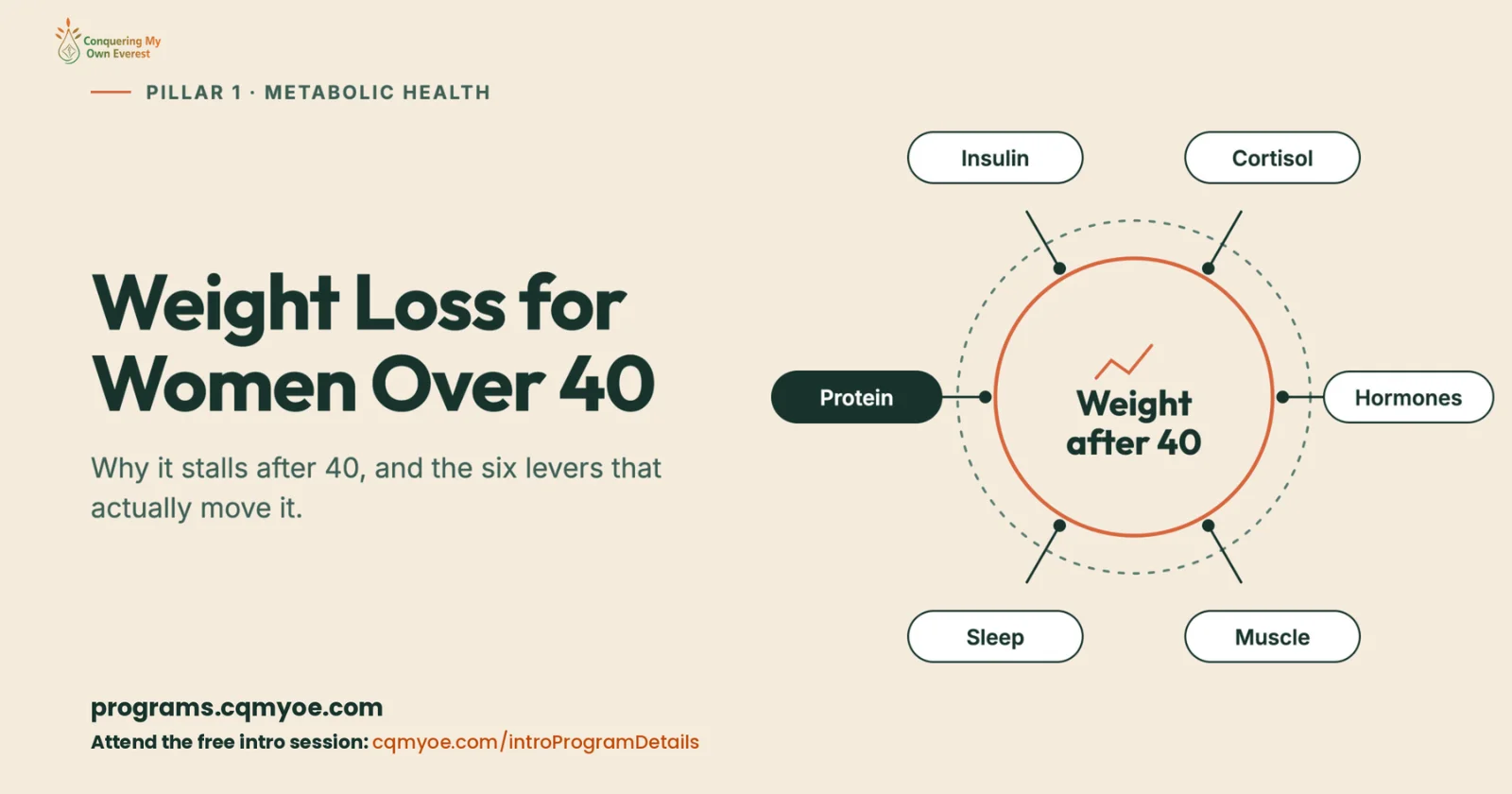
After 40, weight loss stalls because four things stack up at once: insulin resistance, chronic stress (cortisol), shifting hormones in perimenopause, and muscle lost to years of dieting. Eating less makes all four worse. What works is nourishing yourself properly, eating in the right sequence with enough protein, lowering glycemic load and walking after meals. Sleep and stress need the same attention as food.
At 30, you skipped dinner for a week before a wedding and the weight came off. At 42, you skip dinner, feel exhausted, sleep badly, and the scale does not move. Nothing is wrong with your willpower. Your body is working under a different set of rules, and most diet advice was never written for them.
You are not alone in this. Among the [total members] people who joined CQ in 2025 and 2026, obesity was the most common concern, reported by 401 members. Most of them also reported stress, fatty liver, skin or hormonal problems alongside it.
The four things that change after 40
1. Insulin resistance has had years to build. Decades of tea with biscuits, rotis, rice and snacks every couple of hours keep insulin, the storage hormone, raised. Cells stop responding to it, and the body stores more and more as fat, first around the belly and then inside the liver. Read more in how to reverse insulin resistance.
2. Cortisol is running the show. Work deadlines, children's exams, ageing parents and a full household keep the stress hormone high. Cortisol tells the liver to release sugar for a fight that never comes, so blood sugar and insulin stay up even on a healthy diet. We cover this in how to reduce cortisol naturally.
3. Hormones are shifting. Perimenopause changes how your body stores fat, how you sleep and how you handle stress. Women's hormonal systems are more complex than men's, which is why a husband and wife on the same plan often get very different results. See hormonal imbalance in women.
4. Muscle has been lost. Every crash diet breaks down some muscle along with fat. Muscle is where your body stores and burns glucose, so less muscle means more insulin resistance. This is why a calorie deficit stops working after 40.
Why eating less makes it worse
When the body has run on sugar for years, it forgets how to reach its own fat stores. Cut food sharply and it does not switch to fat. It uses stored glycogen, then breaks down muscle to make new glucose. Meanwhile cortisol rises and the thyroid slows down to save energy. You feel cold, tired and irritable, lose strength instead of fat, and the weight returns as soon as you eat normally.
The CQ approach is the opposite: nourish your body (roughly 1,400-1,800 kcal for a mostly sitting adult) and rebuild metabolic flexibility, the body's ability to switch between burning sugar and burning fat.
Weight loss vs fat loss after 40
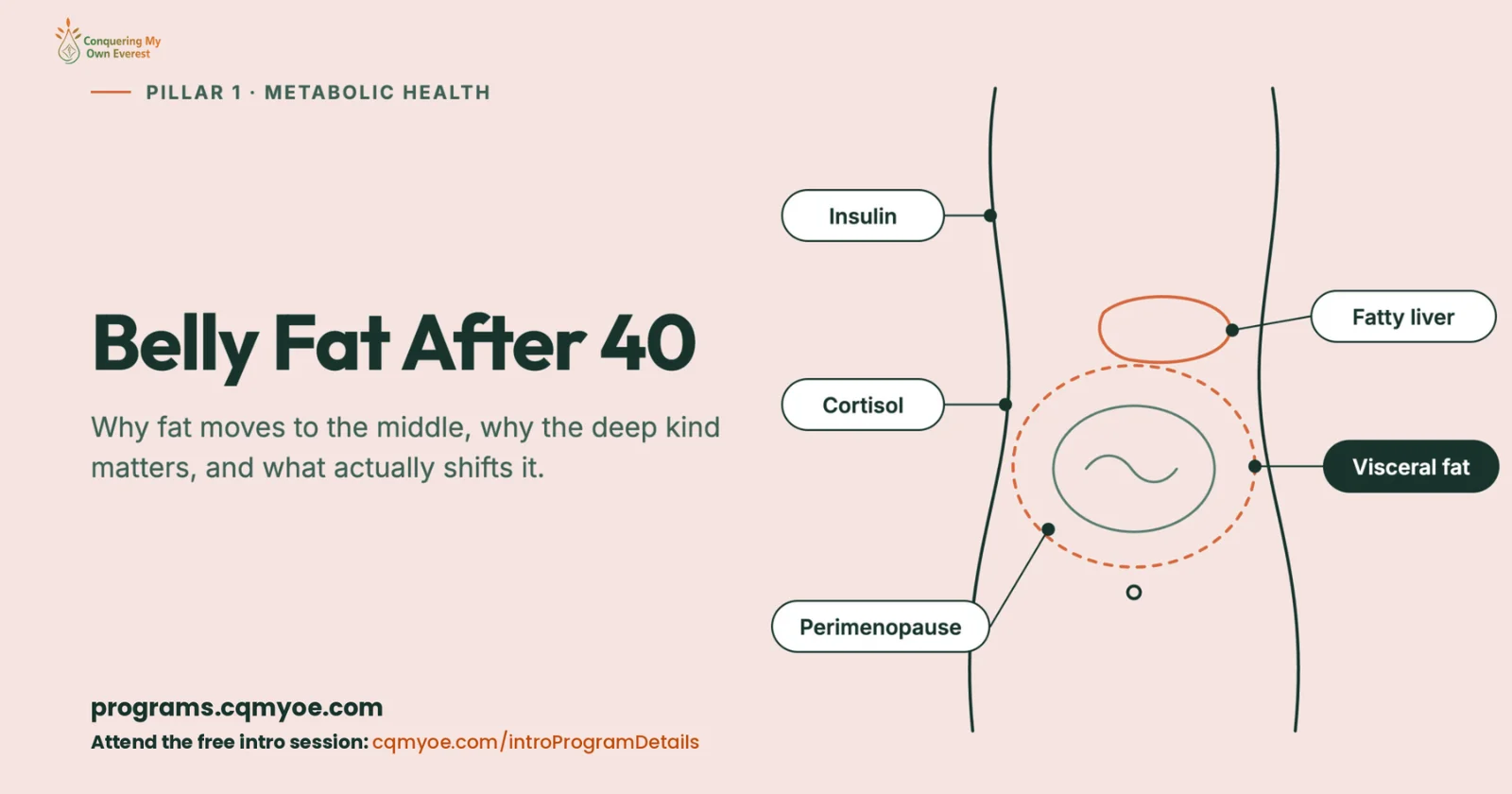
The scale cannot tell you what you lost. Weight loss can mean water, muscle or even bone. Fat loss is the goal, especially deep belly (visceral) fat and fat inside organs such as the liver. That is why CQ tracks your waist, energy, sleep, digestion and blood markers alongside weight. Weight also swings naturally, by half a kilo day to day and up to 2 kg around your cycle. Read belly fat after 40 for the fat that matters most.
What actually works: the CQ plan for women over 40
1. Change one meal first. Start with breakfast. Everything else stays the same in week one. Changing everything at once brings headaches, constipation and burnout.
2. Eat in the CQ Sequence of Eating. A little ghee or butter first, then protein, then dal with skin or sprouts, then well-cooked vegetables, and carbs last, only if you are still hungry. See the CQ Sequence of Eating.
3. Get 20-25 g of protein per meal. Whole eggs, paneer, curd, fish or chicken. Low-protein meals keep you hunting for food, and protein protects the muscle you need after 40.
4. Lower your glycemic load. Most people unknowingly eat a daily glycemic load of 300-400. CQ members bring it to 50-70 in the first 15 days. Learn how in glycemic load vs glycemic index.
5. Stop grazing. Three structured meals instead of constant chai-and-biscuit breaks. Carbs are 2-hour energy; protein and fat keep you going for hours.
6. Walk after meals and build strength. A gentle 10-minute walk after meals, plus moderate strength work two or three times a week.
7. Treat sleep and stress as part of the plan. Dinner 2.5-4 hours before bed, no tea or coffee after sunset, slow breathing and a gratitude journal.
8. Read your reports. A home glucometer and an inch tape tell you more than daily weighing. Check fasting sugar, HbA1c, liver enzymes, triglycerides, the TG/HDL ratio and TSH with your doctor. If your report says fatty liver, start with how to reverse fatty liver.
Find your starting point
If your main worry is... | Start here |
|---|---|
Belly fat that will not shift | |
A "borderline" sugar report | How to reverse prediabetes |
Fatty liver on an ultrasound | How to reverse fatty liver |
Constant hunger and cravings | Carbs are 2-hour energy |
Stress, poor sleep, feeling wired but tired | How to reduce cortisol naturally |
Irregular cycles, PCOS, acne | PCOS and insulin resistance |
Not sure; several of these | 12 signs of insulin resistance |
How long does it take after 40?
Your mind can change in a day; your body changes at the speed of cells. Most women notice better digestion, steadier energy, fewer cravings and fresher mornings within a few weeks, often before the scale moves. Blood sugar markers are worth rechecking after 3 months, and lipids and liver markers after about 6. Lasting change takes many months, which is why CQ focuses on habits you can keep.
Medicines and your doctor
If you take medicine for thyroid, BP, sugar or cholesterol, keep taking it as prescribed. Lifestyle and medicine work together, and your doctor can reduce doses as your markers improve. Never stop on your own.
How CQ helps
Most women over 40 already know what they "should" eat. What they lack is a system that survives work, family meals, travel and festivals. CQ is a 70-day online program with daily huddles, the DRJ food journal and a personal Sherpa who reviews your meals. See how the CQ program works, or join the next CQ batch.
This article is for education and does not replace advice from your doctor.
Frequently asked questions
Why can't I lose weight after 40 even when I eat less?
Because eating less after 40 often breaks down muscle, raises cortisol and slows the thyroid, while high insulin keeps fat locked away. Nourishing yourself and lowering insulin works better than cutting harder.
What is the best diet for women over 40 in India?
Everyday Indian food in the CQ Sequence of Eating: a little ghee, then 20-25 g of protein, dal with skin, cooked vegetables, and carbs last, with a lower daily glycemic load.
Is intermittent fasting good for women over 40?
Not as a first step. Fasting before you can nourish yourself properly breaks down muscle and raises stress hormones. Learn to eat well first.
Does menopause cause weight gain?
Hormonal change shifts where fat is stored, especially toward the belly, and disturbs sleep and stress. Managing insulin and cortisol makes a big difference during this stage.
How much protein does a woman over 40 need?
CQ members aim for 20-25 g per meal, about 60-80 g a day, starting lower if digestion needs time.
Do I need a gym?
No. Walks after meals, stairs, short exercise snacks and moderate strength work at home are enough to start.